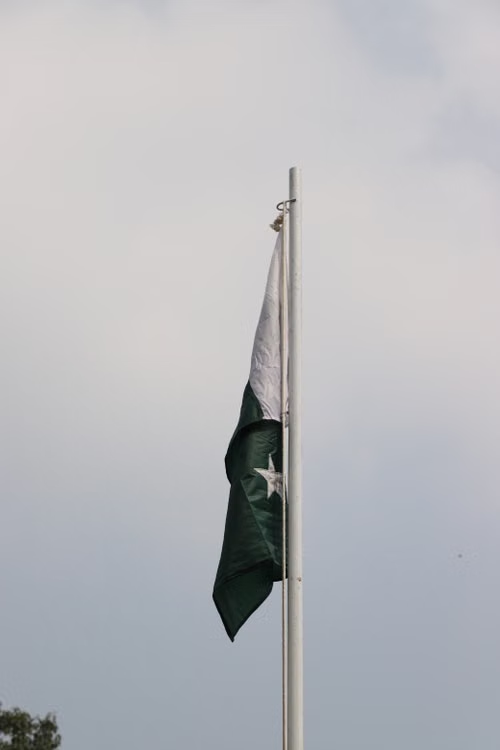
For thousands of young Pakistanis, wearing the olive-green uniform of a Pakistan Army officer is the ultimate dream — a career of honor, discipline, and service to the nation. But how to join Pak Army as officer is a question with a very specific answer: a multi-stage selection process that tests your mind, body, and character. This guide walks you through every step, from online registration to the ISSB and final training at PMA Kakul.
Ways to Join Pak Army as an Officer
There is not just one door into the officer corps. The main routes are:
- PMA Long Course: The primary route — two years of training at the Pakistan Military Academy, Kakul (Abbottabad). Open twice a year to intermediate and graduate candidates.
- Technical Cadet Course (TCC): For FSc (Pre-Engineering) students who want to become engineer officers; includes a funded engineering degree.
- Graduate Course: A shorter course for graduates, also held at PMA.
- Direct Short Service Commission (DSSC): For professionals — doctors, engineers, IT specialists, and others who join specific corps directly.
- AFNS & Lady Cadet Course: Routes for female candidates, including nursing and other selected branches.
This guide focuses on the PMA Long Course, the most popular route, though the initial stages are similar across entries.
Eligibility Criteria for PMA Long Course
Before applying, make sure you meet the basic requirements:
- Age: 17–22 years for intermediate candidates; up to 23 years for graduates and serving personnel (relaxations exist for certain categories).
- Gender and marital status: Male citizens of Pakistan (female candidates apply through AFNS or the Lady Cadet Course); unmarried at the time of application.
- Education: Minimum FA/FSc or equivalent with at least 55% marks (requirements vary slightly by course — check the official advertisement).
- Height: Minimum 5′-4″ (162.5 cm).
- Nationality: Citizen of Pakistan or of Azad Jammu & Kashmir / Gilgit-Baltistan.
Candidates not recommended by the ISSB get a second chance — you have two ISSB attempts in total, so use your first one wisely.
How to Register Online
- Visit the official website joinpakarmy.gov.pk when registration opens (usually twice a year).
- Fill the online registration form carefully — your details must match your CNIC/B-Form and academic certificates.
- Note your roll number and test date, and select your nearest Army Selection and Recruitment Centre (AS&RC) — located in Rawalpindi, Lahore, Karachi, Peshawar, Quetta, Multan, and other major cities.
- Appear at the AS&RC on your test date with original documents.
Warning: Register only through the official website. Anyone promising selection in exchange for money is a fraud — the Army’s selection is strictly merit-based.
Step 1: Initial Written and Intelligence Tests
At the AS&RC, you first face computer-based tests:
- Verbal and non-verbal intelligence tests: Series completion, analogies, odd-one-out, and pattern problems — speed matters as much as accuracy.
- Academic test: MCQs from English, Mathematics, Pak Studies, Islamiat, and General Knowledge at the intermediate level.
Prepare with ISSB test-prep books and free online practice tests. Aim to solve each question in under 30 seconds.
Step 2: Initial Medical and Physical Tests
Candidates who pass the written tests then undergo:
- Physical tests: 1.6 km run (usually within 8–9 minutes), push-ups, pull-ups/chin-ups, sit-ups, and ditch crossing — all on the same day, so stamina is key.
- Initial medical: Height, weight (per BMI standards), eyesight (6/6 with or without glasses within limits), hearing, and general fitness.
- Initial interview: A short interview with senior officers at the AS&RC.
Start running and exercising at least 3–4 months before your test date — physical fitness cannot be built in two weeks.
Step 3: ISSB Tests — The Real Challenge
Those who clear the initial stages are called for the Inter Services Selection Board (ISSB) — four to five days of testing at Kohat, Gujranwala, Malir (Karachi), or Quetta. This is where most candidates are screened out, and it tests personality as much as ability.
Day 1: Screening
Intelligence tests plus picture story writing. Candidates who fail to impress are screened out the same evening.
Days 2–4: The Main Tests
- Psychologist tests: Word Association Test (WAT), story writing, sentence completion, and self-appraisal — designed to reveal your true personality. Be honest and consistent.
- GTO (Group Testing Officer) tasks: Group discussions, group planning, outdoor obstacle tasks, and command tasks that test leadership, teamwork, and initiative.
- Deputy President interview: A one-on-one interview probing your motivation, family background, academics, and current affairs knowledge.
Day 5: Conference
All assessors meet, and each candidate appears briefly before the board. Results are announced the same day — “Recommended” or “Not Recommended”.
ISSB tips: Be yourself — faking a personality is the fastest way to fail. Stay positive in group tasks, take initiative without dominating, and keep your general knowledge (especially about the Armed Forces and Pakistan) sharp.
Step 4: Final Medical and Merit List
ISSB-recommended candidates undergo a detailed final medical at a Combined Military Hospital (CMH). Those declared fit make it to the final merit list prepared at GHQ, and selected candidates receive their call-up letters for PMA.
Training at PMA Kakul
Selected cadets train for two years at the Pakistan Military Academy in Kakul, Abbottabad — one of the most respected military training institutions in the world. The training blends academics, military skills, physical conditioning, and character building. On passing out, cadets are commissioned as Second Lieutenants.
Preparation Tips That Actually Work
- Start physical training early: Run 3–4 times a week; practice push-ups, pull-ups, and sit-ups daily.
- Practice intelligence tests: Speed and accuracy come only with repetition.
- Read the news daily: Current affairs matter in interviews and group discussions.
- Work on spoken English: Clear, confident communication impresses assessors.
- Build genuine confidence: Take part in debates, sports, and team activities — the ISSB rewards real leadership experience.
Common Reasons Candidates Get Rejected
- Poor physical fitness (failing the run or medical standards).
- Memorized, fake responses in psychologist tests.
- Dominating the group or staying completely silent in group tasks.
- Weak general knowledge and current affairs.
- Incomplete or mismatched documents.
If uniformed service appeals to you, also read our Punjab Police jobs guide and our general article on how to apply for government jobs in Pakistan. If you’re also considering the naval route, read our guide on how to join the Pakistan Navy.
Frequently Asked Questions
Can girls join the Pak Army as officers?
Yes — through the AFNS (Armed Forces Nursing Service), the Lady Cadet Course, and DSSC in selected branches. The PMA Long Course is currently for male candidates.
How many times can I attempt the ISSB?
You get two ISSB chances in total. If declared “Not Recommended” twice, you cannot appear again for the same entry.
What is the eyesight requirement?
Generally 6/6 with or without glasses within specified limits. Confirm the current rules in the official advertisement for your course.
What if I fail the initial tests?
You can apply again in the next course, as long as you remain within the age limit.
Is there any fee for registration?
No — registration on joinpakarmy.gov.pk is completely free. Anyone asking for money is committing fraud.
Final Words
Joining the Pak Army as an officer is one of the toughest — and most rewarding — selection processes in Pakistan. It demands months of physical and mental preparation, but every year, ordinary young men and women from Lahore to Larkana and Quetta to Khyber earn the uniform through sheer merit. Start your preparation today, stay consistent, and walk into that AS&RC ready to prove you belong.