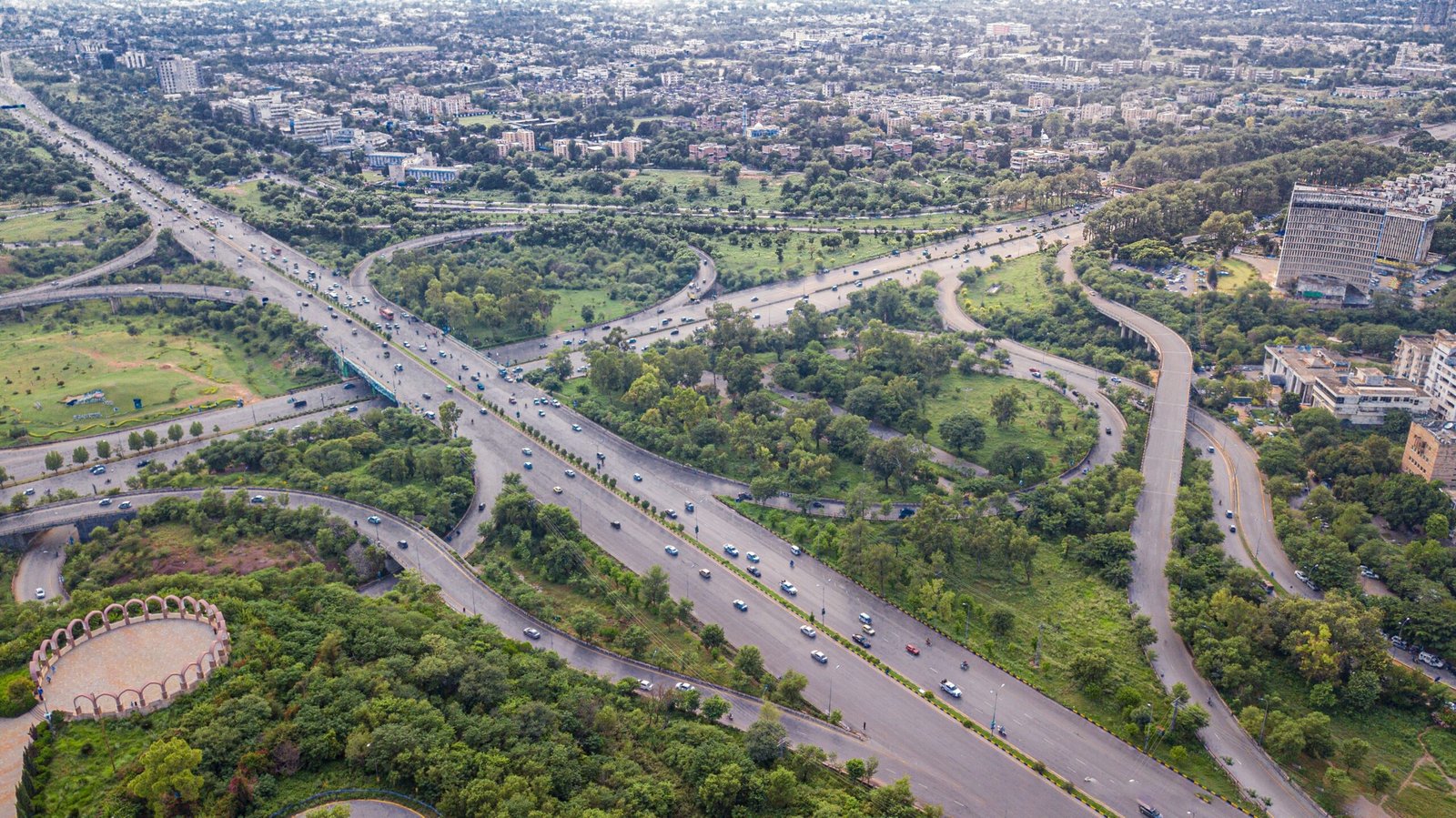
If you have ever driven on the M-2 between Lahore and Islamabad and watched those smart white-and-blue patrol cars glide past, you have probably wondered how to join the force behind them. The National Highway and Motorway Police (NHMP) is one of the most respected federal departments in Pakistan, and motorway police jobs attract thousands of applicants every time the Federal Public Service Commission (FPSC) announces new vacancies.
Unlike many government departments, the Motorway Police has built a reputation for professionalism, courtesy and a zero-tolerance attitude toward corruption. That reputation, combined with a smart uniform, modern vehicles and the pride of serving on Pakistan’s motorway network, makes it a dream job for young graduates across the country. In this complete guide, we explain everything you need to know: eligibility criteria, age limit, physical standards, the FPSC application process, test syllabus, training, salary and career growth.
Why Motorway Police Jobs Are So Popular in Pakistan
Ask any CSS or FPSC aspirant and they will tell you that NHMP is among the most desired non-CSS federal careers. There are solid reasons for this. First, it is a federal government job, which means job security, a pension and posting anywhere in Pakistan. Second, the department’s public image is excellent — motorway police officers are widely seen as disciplined, helpful and professional. Third, Pakistan’s motorway network keeps expanding — from the M-1 Peshawar-Islamabad to the M-2, M-3, M-4, M-5 and the Sukkur-Hyderabad M-6 — which means the force keeps growing and new inductions keep coming.
Finally, the work itself appeals to many young people: patrolling world-class highways, helping stranded travellers, enforcing speed limits with modern equipment and representing Pakistan’s softer, friendlier face of law enforcement. If that sounds like you, keep reading.
NHMP Ranks and the Post You Will Apply For
The post that almost every applicant targets is Patrol Officer (BS-16). This is the gazetted officer-level induction into the National Highway and Motorway Police, and it is filled through the FPSC. As a Patrol Officer, you are the face of the department on the road — leading a patrol beat, managing accidents and emergencies, and supervising the flow of traffic on your assigned sector.
Above the Patrol Officer sit the Senior Patrol Officer (BS-17) and Chief Patrol Officer (BS-18), followed by senior command appointments at SP, SSP and DIG level. Promotions move officers up this ladder over the course of a career, which we will discuss in detail below. If you are also considering provincial policing, do read our Punjab Police jobs guide to compare the two career paths.
Eligibility Criteria for Motorway Police Jobs
Before you start dreaming about the uniform, check that you meet every condition in the FPSC advertisement. The criteria below are based on recent FPSC advertisements for Patrol Officer, but you must always confirm them against the latest ad, because small details can change:
- Nationality: You must be a citizen of Pakistan (male or female).
- Age: 22 to 30 years on the closing date, plus the standard 5-year general age relaxation admissible under government rules — which effectively extends the upper limit to 35 years for most candidates.
- Education: A Bachelor’s degree with at least 2nd division from a university recognised by the HEC. Your degree must be complete before the closing date.
- Driving licence: A valid car/jeep driving licence, held before the closing date of applications. This is non-negotiable — applicants without it are rejected outright.
- Computer literacy: You should be computer literate (basic MS Office and internet use), as modern policing involves digital reporting systems.
- Physical standards: You must meet the prescribed height and chest measurements (details below).
A quick but important note on the licence: learner permits do not count. Apply for your permanent driving licence well in advance, because licence offices in cities like Lahore, Karachi and Rawalpindi can take weeks to process applications.
Physical Standards: Height and Chest Requirements
Physical measurement is a qualifying stage — there is no relaxation here, so measure yourself honestly at home before applying:
- Male candidates: minimum height 5 feet 8 inches; chest 33 inches (unexpanded) x 34.5 inches (expanded).
- Female candidates: minimum height 5 feet 2 inches.
The measurement is conducted by the department before the interview stage. Stand straight, and if you are borderline on height, get measured at a clinic rather than guessing. Many candidates are surprised on measurement day — do not let that be you.
How to Apply for Motorway Police Jobs Through FPSC
All Patrol Officer inductions are handled by the Federal Public Service Commission. The process is fully online. Here is exactly what to do when the advertisement appears:
- Find the advertisement: FPSC publishes consolidated advertisements in major newspapers and on fpsc.gov.pk. Note the case number and closing date.
- Deposit the test fee: In recent advertisements the fee has been Rs. 300, payable at National Bank of Pakistan or State Bank branches (or through 1Link). Keep the original deposit slip safe — you will need it later.
- Apply online: Fill the online application form at fpsc.gov.pk before the closing date. Enter your name and father’s name exactly as on your CNIC, select the correct domicile province, and choose the Patrol Officer post carefully.
- Upload documents: Have scanned copies of your CNIC, degree/transcript, domicile certificate, driving licence and a recent photograph ready in the required size and format.
- Download your admission certificate: FPSC uploads roll number slips before the screening test. Print yours and check the test centre and timing.
If you are new to the FPSC system, our FPSC exam preparation guide walks you through registration, fee deposit and test-day formalities in detail.
The Selection Process, Step by Step
Getting selected is a multi-stage marathon, not a single test. Here is the typical sequence:
- Screening (MCQ) test: A 100-mark multiple-choice paper used to shortlist candidates. Only those who clear the cut-off move forward.
- Descriptive examination: Shortlisted candidates attempt written, descriptive papers testing English expression and subject knowledge.
- Physical measurement: Height and chest are measured as per the standards above. Candidates who fail to meet them are disqualified.
- Interview: A panel interview before the FPSC, testing your personality, motivation, knowledge of the department and general awareness.
- Medical examination: A fitness medical at a government hospital.
- Final merit and appointment: FPSC recommends candidates on merit (with provincial/regional quotas applied under government policy), and NHMP issues appointment letters.
The whole cycle — from advertisement to final merit list — commonly takes several months, so patience is part of the preparation. Keep preparing for the descriptive stage even while waiting for screening results.
FPSC Screening Test: Syllabus and Preparation Tips
The screening test is where most candidates are eliminated, so take it seriously. The paper typically contains 100 MCQs to be solved in about 100 minutes, drawn from:
- English: vocabulary (synonyms/antonyms), grammar, sentence correction and comprehension.
- General knowledge and Pakistan Affairs: history, geography, constitution, important personalities and places.
- Current affairs: national and international events of the last 6–12 months.
- Islamiat: basic Islamic history, beliefs and practices.
- Everyday science and basic arithmetic: school-level concepts and quick calculations.
Practical tips from past qualifiers: solve at least the last five years of FPSC past papers, build a daily habit of reading a good English newspaper, revise one standard MCQ book thoroughly rather than skimming five, and practise with a timer — speed matters as much as knowledge. For a structured study plan, see our FPSC exam preparation guide.
Training at the NHMP Training College
Selection is only the beginning. Newly appointed Patrol Officers undergo basic professional training at the NHMP Training College in Sheikhupura. The course blends classroom instruction with field work: motorway and highway law, patrolling techniques, accident handling, first aid, wireless communication, report writing and physical training, along with advanced driving skills.
Training is disciplined and residential — expect early mornings, drills and inspections. Officers who complete it successfully join the force with the confidence to handle real road emergencies from day one. Treat the training period as the foundation of your entire career: the habits and reputation you build there follow you to your first posting.
Salary, Allowances and Perks
Patrol Officers are appointed in Basic Pay Scale 16. Your monthly package includes the basic pay of BS-16 plus federal government allowances — house rent, conveyance, medical and the ad-hoc relief allowances announced in successive budgets. Taken together, a newly recruited Patrol Officer typically takes home roughly PKR 70,000 to 90,000 per month, though the exact figure varies with pay revisions, city of posting and marital status (which affects house rent calculations).
Beyond the salary, the perks are meaningful: an official vehicle while on duty, free medical treatment at government hospitals, the smart NHMP uniform, and eligibility for government accommodation (subject to availability and the usual waiting lists). And, of course, there is the federal pension on retirement — a benefit that keeps growing in value as private-sector retirement planning gets harder.
Career Growth: From Patrol Officer to Senior Command
A career in the Motorway Police is not a dead end — it is a ladder. With satisfactory service and departmental examinations, Patrol Officers are promoted to Senior Patrol Officer (BS-17) and then Chief Patrol Officer (BS-18), taking on sector and beat command responsibilities. From there, meritorious officers can rise to senior command appointments at SP, SSP and DIG level within the NHMP hierarchy.
Promotions depend on seniority, performance reports and available vacancies, so officers who keep clean service records and upgrade their qualifications (for example, adding a Master’s degree or specialised traffic-management courses) tend to move faster. For a broader comparison of public versus private career tracks, read our government vs private jobs comparison.
5 Mistakes That Get Applications Rejected
- Applying without a valid driving licence — the single most common reason for rejection. A learner permit does not count.
- Miscalculating your age — age is counted on the closing date, not the date you apply. Confirm your eligibility before paying the fee.
- Wrong domicile or name spelling — entries must match your CNIC exactly; mismatches cause problems at the interview stage.
- Blurry or oversized document scans — keep each scan clear and within the file-size limits mentioned in the ad.
- Missing the fee deadline — the fee must be deposited before the closing date, and the original slip retained.
FAQs About Motorway Police Jobs
Can females apply for motorway police jobs?
Yes. Female candidates are encouraged to apply, with a minimum height requirement of 5 feet 2 inches, and provincial quotas apply as per government policy.
Is there a running or physical endurance test?
The advertised requirement for Patrol Officer is physical measurement (height and chest). Always check the latest FPSC advertisement in case the scheme is revised.
Can I apply from any province?
Yes — all Pakistani citizens can apply. Provincial and regional quotas are applied at the final merit stage under government rules.
How often are motorway police jobs announced?
There is no fixed annual calendar; inductions depend on vacancies. Watch the FPSC consolidated advertisements and major newspapers regularly so you never miss one.
Final Words
Motorway police jobs offer something rare in Pakistan’s job market: a respected uniform, a modern work environment, federal job security and a clear path upward. The competition is tough — thousands apply for every batch — but the process is transparent and merit-based, which means serious preparation genuinely pays off. Get your degree in order, secure your driving licence early, start solving FPSC past papers today, and when the next advertisement drops, you will be ready. Good luck — we hope to see you patrolling the M-2 soon.
For another prestigious federal career option, check our complete guide to FIA jobs.