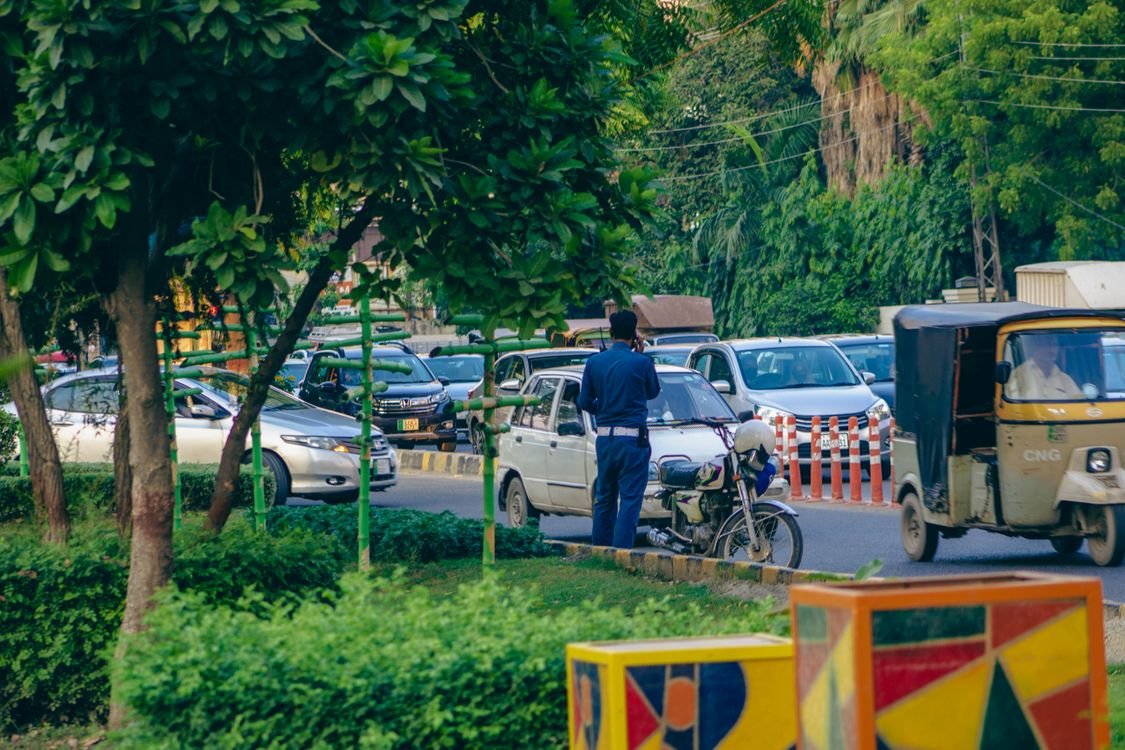
If you grew up in Karachi, Hyderabad, Sukkur, or Larkana, you have seen them everywhere — at every traffic signal, outside every examination centre, and at every Eidgah on Eid morning. The Sindh Police constable in the dark blue uniform is one of the most visible government servants in the province. For thousands of young men and women across Sindh, joining the police is not just a job; it is the most respected government career they can reach with a Matric certificate in hand. If you are wondering how to join Sindh Police in 2026, this guide explains the whole process — the posts, the eligibility rules, the physical and written tests, the documents you need, and the application procedure, step by step.
Why So Many Young People in Sindh Want This Job
Let us be honest about the motivation first. A government job in Pakistan means a fixed monthly salary, annual increments, free medical treatment at government hospitals, and a pension after retirement. For a family in interior Sindh, where private-sector jobs are scarce, a son or daughter in the police is financial security for the whole household. A newly recruited Constable (BPS-07) typically starts with a monthly package in the range of PKR 50,000 to 60,000 once basic pay and allowances are added, and the figure grows with increments and promotions. On top of the money, there is the respect factor — in our society, a uniform still commands real izzat.
I still remember the morning my cousin appeared for his Sindh Police physical test at the Police Training Centre in Razzakabad, Karachi. We reached before sunrise, and the ground was already packed — hundreds of boys in white shalwar kameez doing warm-up laps, pinning paper chest numbers to their shirts with safety pins, while their fathers waited outside the gate holding files of documents and bottles of water. Nobody looked nervous about the written paper. Everybody was nervous about the running. That scene told me everything about where this recruitment is actually won and lost.
My Honest Opinion: The Race Decides More Than the Paper
Here is my honest opinion after following police recruitment in Sindh for years: the running test is the real selection, not the written examination. The written paper is a straightforward Matric-level MCQ test that any serious student can pass with a few weeks of study. The 1.6 kilometre run, on the other hand, quietly eliminates the majority of candidates — not because they are unfit people, but because they start training a week before the test. If you take one thing from this guide, let it be this: start running today, even before the advertisement is published. Six to eight weeks of consistent morning running will do more for your selection chances than any academy or guidebook.
Posts You Can Apply For in Sindh Police
Sindh Police recruits at several levels. Knowing which post matches your qualification saves you from applying for the wrong seat:
- Police Constable (BPS-07): The backbone of the force. Minimum qualification is Matric (second division) from a recognized board. This is the post with the largest number of vacancies in every cycle.
- Lady Constable (BPS-07): Recruited against a dedicated quota for women, with the same Matric requirement and slightly relaxed physical standards.
- Driver Constable (BPS-07): For candidates holding a valid LTV or HTV driving licence along with Matric.
- Assistant Sub-Inspector – ASI (BPS-11): Requires Intermediate (FA/FSc). Fewer seats, tougher competition, but an officer-level entry.
Recruitment is carried out district-wise and region-wise (Karachi, Hyderabad, Sukkur, Larkana, and Mirpurkhas ranges), which means you compete mainly against candidates from your own area — a big advantage if you prepare properly.
Eligibility Criteria for Sindh Police Jobs 2026
Before you start preparing, confirm that you meet the basic criteria. These are the standard requirements seen in recent advertisements, but always verify against the official ad of your cycle:
- Domicile: You must hold a domicile and PRC (Permanent Residence Certificate) of a district in Sindh. Your application is processed against your district’s quota, so an out-of-province domicile will get your form rejected.
- Age limit: Generally 18 to 28 years for Constable posts, with the standard government age relaxation applied as per Sindh government rules. ASI posts usually carry the same bracket.
- Education: Matric (second division) for Constable and Lady Constable; Intermediate for ASI. Degrees must be from boards and universities recognized in Pakistan.
- Physical standards (male): Minimum height around 5 feet 6 inches, chest 33 x 34.5 inches (unexpanded x expanded).
- Physical standards (female): Minimum height around 5 feet 2 inches.
- Character: No criminal record. A police verification is part of the final stages.
Measurements are taken barefoot by a medical board, and there is genuinely no flexibility — even half an inch short means disqualification at that stage.
The Recruitment Stages, Explained
Joining the Sindh Police is a multi-stage process. Understanding the full sequence helps you prepare for each step instead of being surprised by it.
1. The Advertisement
Vacancies are announced on the official website sindhpolice.gov.pk and in leading newspapers such as Jang, Dawn, Express, and Kawish. Read the advertisement carefully — it states the exact number of posts per district, the age limit, the fee, and the last date. Screenshot or print it; you will refer to it repeatedly.
2. Applying Through STS (Sukkur IBA Testing Service)
In recent cycles, Sindh Police recruitment tests have been conducted through STS — the testing service of Sukkur IBA University. The typical procedure is: fill the online application form on the STS portal (apply.sts.net.pk), print the filled form, and deposit the prescribed application fee through a bank challan at the designated bank branches mentioned in the advertisement. Keep the original paid challan safe — it is your proof of payment and is checked at later stages. Submit the form before the deadline; late applications are not entertained, no matter the excuse.
3. The Physical Test
This is the first elimination stage and, as I said, the most important one. Male candidates are generally required to complete a 1.6 km run in about 8 minutes; female candidates usually run 800 metres in about 14 minutes. The run happens on a ground at your regional Police Training Centre or Police Lines, often in the morning heat. Train on a proper ground, not on a treadmill — the surface, the dust, and the crowd all feel different on test day. Alongside the run, your height and chest measurements are recorded.
4. The Written Test
Candidates who clear the physical stage sit a written test, usually 100 MCQs to be solved in about two hours. The typical syllabus includes English (grammar, vocabulary, sentence correction), General Knowledge and current affairs of Pakistan, Pakistan Studies, Islamiat, basic Mathematics, and Urdu or Sindhi. The passing threshold is generally around 40 to 50 percent, but remember: this is a competition, not just a pass-fail exam. Higher marks mean a better position on the merit list.
5. Interview, Medical, and Final Merit
Shortlisted candidates face an interview panel, followed by a medical examination at a government hospital and police verification of character. The final merit list is prepared district-wise according to the quota, combining written test marks and interview performance. If your name appears on the list, you proceed to training at the Police Training Centre.
Documents You Will Need
Start collecting these now instead of running around in the final week:
- Your original CNIC (and keep several photocopies)
- Sindh domicile certificate and PRC of your district
- Matric / Intermediate certificates and result cards
- Four to six recent passport-size photographs, usually with a blue background
- Character certificate (generally asked for at the final stages)
- Valid LTV/HTV driving licence (for Driver Constable only)
- The paid bank challan and printed application form
One detail that gets many applications rejected: the name and date of birth on your CNIC must match your academic certificates exactly. Get any mismatch corrected at NADRA or your board well before you apply.
Salary, Allowances, and Career Growth
A newly recruited Constable (BPS-07) starts with a monthly package roughly in the PKR 50,000 to 60,000 range, depending on posting and allowances — figures vary slightly by budget year, so treat this as a ballpark. Beyond the salary, you get free medical facilities, government accommodation or hiring allowance in many postings, and pension on retirement. Promotions follow a clear path: Constable to Head Constable, then ASI, Sub-Inspector, and beyond, through departmental examinations and seniority. It is a career, not just a job.
How to Apply for Sindh Police Jobs 2026: Step by Step
Here is the practical sequence once an advertisement is published:
- Step 1: Read the official advertisement on sindhpolice.gov.pk and note the closing date, fee, and district-wise seats.
- Step 2: Fill the online application form on the STS portal with spellings exactly as per your CNIC and Matric certificate.
- Step 3: Print the form and deposit the application fee through the bank challan at the designated bank.
- Step 4: Submit the form as instructed (online submission plus keeping the printed copy and paid challan with you).
- Step 5: Download your roll number slip when announced and note your physical test date and venue.
- Step 6: Appear for the physical test with your CNIC, slip, and proper running shoes.
- Step 7: Clear the written test, then the interview and medical.
- Step 8: Check the final merit list for your district.
Preparation Tips That Actually Work
- Run every morning for at least six weeks before the expected test date. Build up from 1 km to 2 km gradually; your body needs time to adapt.
- Study Sindh-specific general knowledge: districts of Sindh, the Indus River and its barrages, Mohenjo-daro, the provincial assembly, and recent Sindh current affairs. These questions repeat.
- Solve past papers of previous Sindh Police and STS tests. The MCQ style repeats heavily.
- Fix your English basics: tenses, prepositions, synonyms, and sentence correction are easy scoring areas.
- Prepare your documents in parallel with your studies — domicile and PRC processing can take weeks.
Common Mistakes That Get Applications Rejected
- Applying with a domicile from another province.
- Name or date-of-birth mismatch between CNIC and academic certificates.
- Missing the deadline — forms are not accepted even one day late.
- Ignoring physical training until the final week.
- Trusting agents who demand money for recruitment. Sindh Police recruitment is merit-based; anyone asking for payment for a guaranteed seat is running a scam. Report such people instead of paying them.
FAQs About Joining Sindh Police
Can females apply for Sindh Police jobs? Yes. Lady Constables are recruited in every cycle against a dedicated quota, and women also compete for other suitable posts.
What is the age limit for Sindh Police constable? Generally 18 to 28 years, with government-announced relaxations where applicable. Confirm the exact bracket in the official advertisement.
Is there an application fee? Yes, a modest fee is deposited through a bank challan as specified in the ad. The exact amount is announced with each recruitment cycle.
Can I apply with FA or FSc? Yes. Intermediate qualifies you for Constable as well as ASI posts.
Final Words
Joining the Sindh Police in 2026 is a genuine opportunity for disciplined, hardworking young Pakistanis — especially those from areas where government jobs are the surest path to stability. The process rewards preparation, not connections: run daily, study the syllabus, keep your documents ready, and apply the moment the advertisement drops. If you are comparing your options across provinces, also read our Punjab Police jobs guide to see how the eligibility and physical standards differ next door.