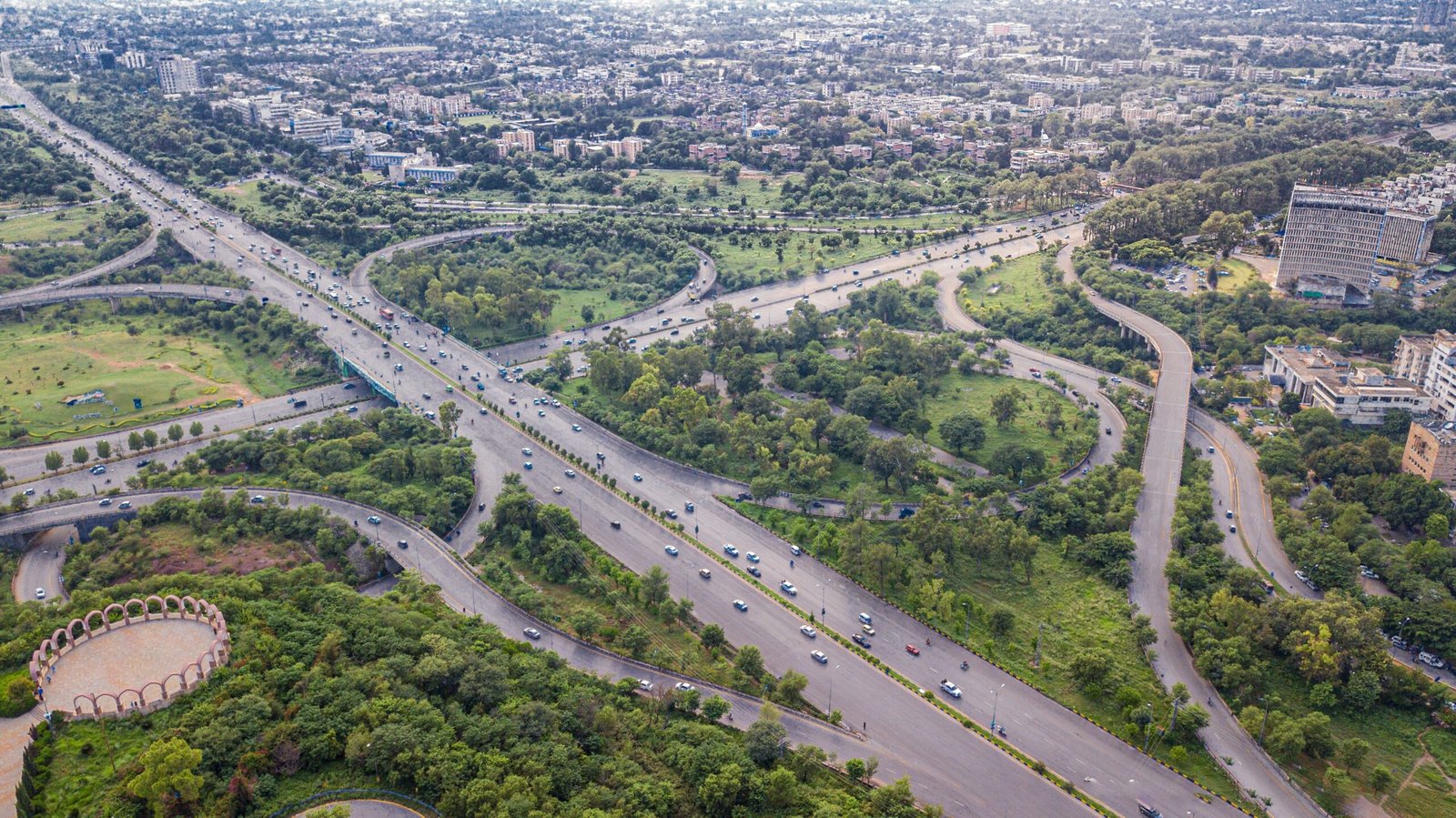
Islamabad may be Pakistan’s most planned city, but getting into its police force is anything but predictable. The Islamabad Capital Territory (ICT) Police announces recruitment in bursts — a few hundred constable seats one year, silence the next — and when the advertisement finally drops, thousands of applications pour in within days. If you are searching for how to join Islamabad police, this guide covers the complete process for 2026: the posts you can apply for, eligibility rules, physical standards, the running test that eliminates most candidates, and exactly how to submit your application when vacancies open.
What Is the Islamabad Capital Territory (ICT) Police?
The ICT Police is the law enforcement agency responsible for Pakistan’s federal capital. Unlike provincial forces, it operates directly under the Ministry of Interior, which gives it a distinctly federal character. Its officers serve in the capital’s police stations, traffic division, special branch, and investigation wing, and the force is headed by an Inspector General (IG) based at the Police Lines Headquarters in Islamabad. Because Islamabad is the seat of government, ICT Police personnel regularly handle VIP security, diplomatic envoys, and high-profile national events alongside routine policing — part of what makes the uniform so attractive to young aspirants.
Here is a practical observation most guides skip: the ICT Police is a comparatively small force, and that cuts both ways. Seats are fewer than in Punjab or Sindh Police, so competition per seat is brutal. But officers get noticed faster — in a force this size, a hardworking constable does not disappear into a district of thousands. That visibility is worth weighing against the bigger provincial forces. Frankly, for an ambitious young recruit, a smaller federal force can be a smarter career bet than a giant provincial one where promotions crawl along seniority lists. Your talent gets seen sooner in Islamabad.
ICT Police Posts and Ranks You Can Apply For
Recruitment generally opens at three entry levels. Knowing which one matches your qualification saves you from applying for the wrong post:
- Constable (BPS-07): The backbone of the force. Minimum qualification is Matric. Both male constables and lady constables are recruited in every major drive.
- Assistant Sub-Inspector – ASI (BPS-11): Requires Intermediate (FA/FSc or equivalent). A popular target for college students who want an officer-grade start without waiting for a degree.
- Sub-Inspector – SI (BPS-14): Requires a Bachelor’s degree from an HEC-recognized university. Fewer seats and tougher merit, but a genuine officer rank from day one.
Senior posts (ASP and above) are filled through the CSS and FPSC route, not through these recruitment drives, so this guide focuses on the constable-to-SI track — where the vast majority of aspirants actually compete.
Eligibility Criteria for Islamabad Police Jobs 2026
1. Nationality and Domicile
You must be a citizen of Pakistan. For constable-level recruitment, an ICT domicile is normally required, and provincial or regional quotas may apply under federal government policy. Domicile rules shift between advertisements, so treat the official ad as the final word — never assume last year’s rules still apply.
2. Age Limit
For Constable and Lady Constable, the standard bracket is 18 to 22 years. ASI posts usually follow the same range, while Sub-Inspector candidates can generally be up to 25. Age is calculated on the closing date of applications, not the day you submit your form — a small detail that disqualifies careless applicants every single cycle.
3. Educational Qualification
- Constable: Matric (second division) from a recognized board.
- ASI: Intermediate (FA/FSc or equivalent).
- Sub-Inspector: Bachelor’s degree (14 years of education) from an HEC-recognized university.
4. Physical Standards
- Male candidates: minimum height 5 feet 7 inches; chest 33 inches (unexpanded) x 34.5 inches (expanded).
- Female candidates: minimum height 5 feet 2 inches.
Measurements are taken barefoot by a medical board, and there is no relaxation — half an inch short is still short. Measure yourself honestly at home before you apply.
5. The Running Test
Male candidates must complete a 1.6 km run in 7 minutes; female candidates get 10 minutes for the same distance. This single test eliminates more aspirants than every other stage combined. Start training at least six to eight weeks before the expected test date — and train on a proper ground, not just a road. Physical tests are typically held at the Police Lines ground in Islamabad early in the morning, and candidates who only ever jogged on flat city roads often gasp on the uneven ground in the cold morning air. Train where you will be tested.
The Recruitment Process, Step by Step
- Official advertisement: published in leading newspapers and on the ICT Police website.
- Application submission: forms submitted at designated centers before the deadline.
- Physical measurement and running test: qualifying stages — fail here and you are out, regardless of your academics.
- Written test: usually a 100-mark paper covering general subjects (details below).
- Interview: before a departmental selection board.
- Medical examination and document and character verification.
- Final merit list and basic training at the police training college.
The whole cycle, from advertisement to final merit list, commonly takes several months. Patience is part of the test.
How to Apply for Islamabad Police Jobs: The Practical Steps
- Watch for the advertisement on the official ICT Police website (islamabadpolice.gov.pk) and in newspapers such as Jang and Express. Confirm every ad on the official site — never trust WhatsApp forwards.
- Obtain the application form exactly as instructed in the ad (download it or collect it from the designated office).
- Fill it with care, using the exact name spellings from your CNIC and Matric certificate. Name mismatches between documents are a classic, avoidable reason for rejection.
- Attach attested copies of your CNIC, domicile, educational certificates, and recent photographs, plus any required fee draft.
- Submit before the deadline at the designated center, and obtain a receipt or diary number — your only proof of submission.
- Track announcements for the physical test schedule. Eligible-candidate lists are displayed at Police Lines and published online.
One warning that bears repeating: never pay any agent who promises a guaranteed seat. Recruitment is merit-based, and fraudsters prey on desperate candidates every cycle.
Documents You Will Need
- Your CNIC (your father’s CNIC is asked for in some cycles)
- ICT domicile certificate
- Matric / Intermediate / Graduation certificates and result cards
- Four to six recent passport-size photographs, usually with a blue background
- Character certificate (generally asked for at the final stages)
Keep attested photocopies ready for submission and originals safe for verification at the interview stage. Domicile certificates and attestations take time — do not leave them for the last week.
Written Test: Syllabus and Passing Marks
Candidates who clear the physical stage sit a written test, usually of 100 marks. The typical syllabus includes general knowledge and current affairs of Pakistan, Pakistan Studies, Islamiat, English grammar and vocabulary, Urdu, everyday science, basic mathematics, and questions about policing in Pakistan. Past papers are your best preparation tool because question styles repeat heavily. If you are also preparing for other government tests, our guide on how to prepare for NTS test in Pakistan covers study techniques that transfer directly to this paper.
Salary, Allowances, and Benefits
A newly recruited Constable (BPS-07) typically starts with a monthly package in the range of PKR 45,000 to 60,000 including allowances; ASI (BPS-11) and Sub-Inspector (BPS-14) start higher on their respective scales. As a federal force, ICT Police personnel also benefit from federal allowances and something money cannot buy: posting stability in the capital. No remote district postings, no transfers to far-flung tehsils — a genuine quality-of-life advantage over provincial forces that many aspirants underestimate until they live it.
Preparation Tips From Successful Candidates
- Start physical training early. Six to eight weeks minimum — the running test is the biggest filter.
- Study past papers first. Pakistan Studies, Islamiat, and current affairs carry heavy weight and repeat often.
- Fix your English basics. Tenses, prepositions, synonyms, and sentence correction are easy scoring areas.
- Follow official channels. Check the ICT Police website for schedules rather than relying on rumors.
- Prepare documents now. Domicile certificates and attested copies take time.
Common Mistakes That Get Applications Rejected
- Applying with the wrong domicile.
- Name or date-of-birth mismatch between CNIC and academic certificates.
- Missing the deadline — forms are not accepted even one day late.
- Ignoring physical training until the final week.
- Trusting agents who demand money for recruitment.
FAQs About Joining Islamabad Police
Can females join the Islamabad Police?
Yes. Lady constables are recruited in every major cycle against dedicated quotas, and women also compete for ASI and Sub-Inspector posts.
What is the age limit for Islamabad Police constable?
Generally 18 to 22 years, calculated on the closing date. Confirm the exact bracket in the official advertisement.
Is there an application fee?
Some cycles require a small fee through a bank draft, while others are completely free. The advertisement specifies the requirement.
How often are Islamabad Police jobs announced?
There is no fixed annual calendar — inductions depend on vacancies. Check the ICT Police website regularly rather than waiting for news.
Can I apply with FA or FSc?
Yes. Intermediate qualifies you for constable as well as ASI posts, and graduates can additionally target Sub-Inspector.
Final Words
Islamabad Police offers something rare in Pakistan’s job market: a federal uniform, capital-city postings, and a compact force where good work gets noticed quickly. The process is demanding but transparent — meet the standards, clear the tests, and the merit list does the rest. If you are comparing your options, read our Punjab Police jobs guide and our Motorway Police jobs guide to decide which force fits you best.