Every year, tens of thousands of young men and women across Pakistan clear their initial tests at selection centres, full of hope — and then face the real challenge: the ISSB test. The Inter Services Selection Board is the final personality, intelligence and leadership assessment for anyone who wants to become a commissioned officer in the Pakistan Army, Pakistan Navy or Pakistan Air Force. Only a fraction of candidates hear the word “Recommended” at the end of those four gruelling days.
The good news? The ISSB is not a mystery. It tests learnable qualities — and with the right preparation, you can walk in confident instead of nervous. This complete guide explains how to prepare for the ISSB test in Pakistan: the day-by-day stages, physical standards, psychological tests, the interview, the best books, and a practical 30-day preparation plan you can start today.
What Is the ISSB Test?
The Inter Services Selection Board (ISSB) is the joint selection system of Pakistan’s armed forces. After you pass the initial written, medical and physical tests at an Army Selection and Recruitment Centre (AS&RC), a PAF Information & Selection Centre, or a Pakistan Navy Recruitment Centre, you are nominated to appear before the ISSB.
The board runs four selection centres: Kohat (the oldest and largest), Gujranwala, Malir (Karachi) and Quetta. You will be allotted one of these and must report there for four days of continuous testing, usually reporting a day early. During these four days, three different assessors — a psychologist, a Group Testing Officer (GTO) and the Deputy President — observe and evaluate you independently. On the final day, they sit together in a board conference and decide your fate: Recommended or Not Recommended.
There are no passing marks in the traditional sense. You are judged against a set of officer-like qualities: intelligence, confidence, communication skills, teamwork, leadership potential, stamina, sense of responsibility and emotional stability. Everything you do — from how you speak in a group discussion to how you help a struggling teammate on an obstacle — is being assessed.
ISSB Test Stages – Day by Day
Day 1: Arrival and Screening
Day one starts with reporting, document verification and an opening address by the staff. Then comes the screening test, which eliminates roughly 40–50% of candidates on the very first day. Screening has two parts:
- Intelligence tests: verbal and non-verbal (picture/pattern) questions, similar to — but tougher than — your initial test. Speed matters.
- PPDT (Picture Perception and Discussion Test): you are shown a hazy picture for 30 seconds, write a short story about it in about 4 minutes, and then discuss it in a group of 12–15 candidates.
If you survive screening, you stay. The rest are sent home the same evening. This is why practising timed intelligence questions before you go is non-negotiable.
Day 2: Psychological Assessment
Day two is a written marathon conducted by the psychologist. It typically includes:
- Thematic Apperception Test (TAT): you write stories on a series of pictures shown for a few seconds each.
- Word Association Test (WAT): around 100 words flashed one by one; you must write a short, meaningful sentence on each within seconds.
- Situation Reaction Test (SRT): around 60 everyday situations; you write your immediate response to each.
- Self-description: what your parents, teachers and friends think of you — and what you think of yourself.
The psychologist is looking for a consistent, positive, action-oriented personality. Your stories, sentences and self-description must paint the same picture of you — contradictions are a red flag.
Days 3–4: GTO (Group Testing Officer) Tasks
The GTO assesses you in outdoor group tasks. These usually include:
- Group discussions (one in Urdu, one in English) on current affairs and social topics.
- Group planning exercise: solving a model-based problem as a team.
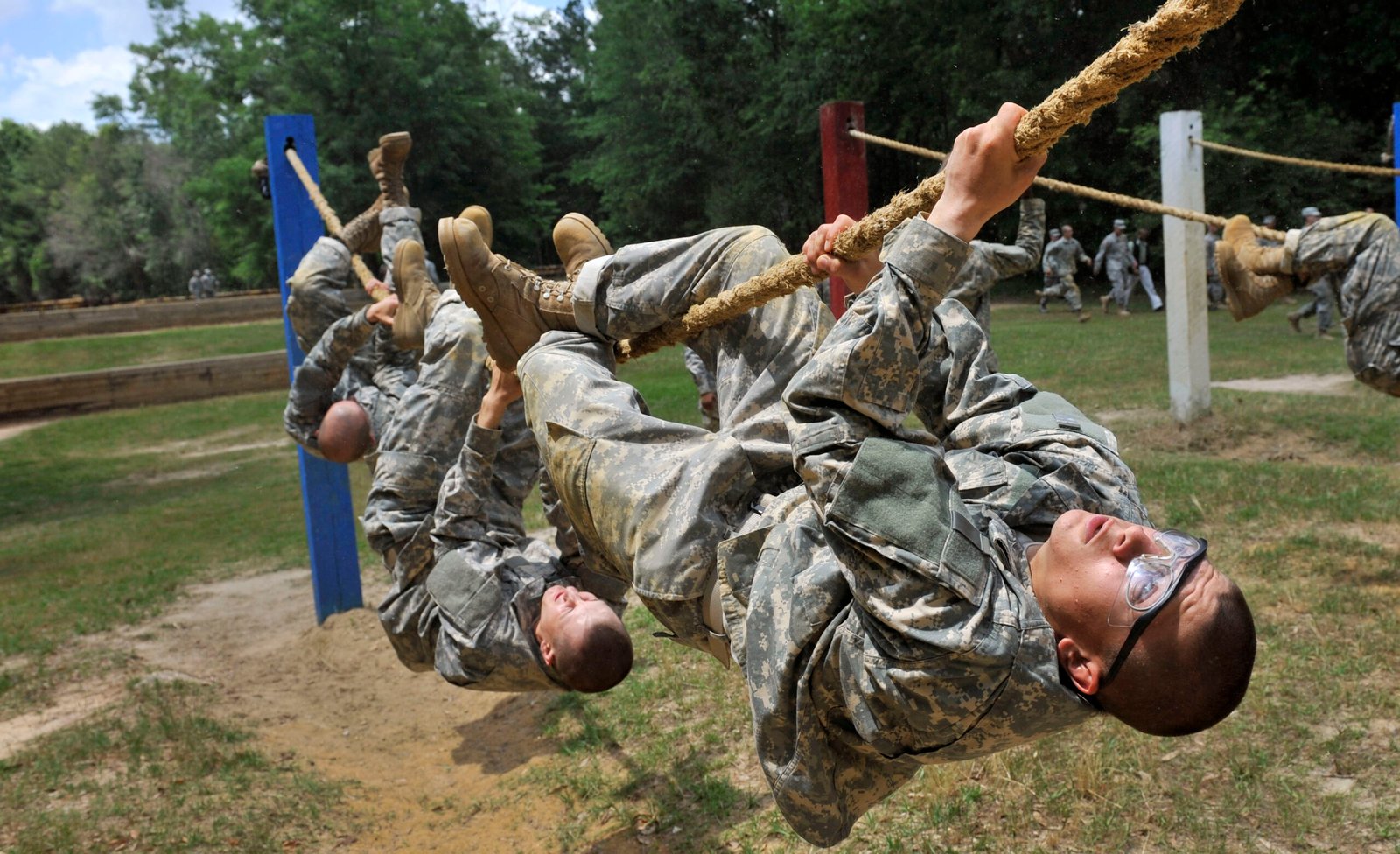
- Progressive and half-group tasks: crossing obstacles with planks, ropes and drums as a team.
- Individual obstacles: typically 9 obstacles (rope climbing, monkey bridge, wall climbing and similar) to be completed against the clock.
- Command task: you are made the leader and must get your group across an obstacle.
- Final group task and the GTO’s interview-style chat.
Here, bossiness fails and so does silence. The GTO wants a cooperative team player who takes initiative without steamrolling others. If you are physically unfit, these two days will expose you — which is why fitness preparation is half the battle.
Day 4–5: Personal Interview and Final Result
The Deputy President (usually a brigadier or equivalent) interviews each candidate for 15–25 minutes. Expect questions about your education (especially your FSc/FA subjects), family background, hobbies, why you want to join the forces, and your opinion on current national affairs. Answer honestly and in your own words — crammed, “ideal” answers are easy to spot.
After all tests, the board holds its conference. Results are announced the same day. Recommended candidates proceed to the final medical examination at a Combined Military Hospital (CMH); those not recommended return home, but can try again (you get two ISSB chances in most cases).
If you are still at the initial stage, read our detailed guide on how to join the Pak Army as an officer to understand the full journey from registration to ISSB.
Physical Fitness Preparation for ISSB
Many brilliant students fail at ISSB for one simple reason: fitness. The GTO’s individual obstacles demand upper-body strength, agility and stamina. Start preparing at least 8–12 weeks before your ISSB date. Aim for these benchmarks:
- 1.6 km run: under 7 minutes (competitive candidates do it in 6:00–6:30).
- Push-ups: 20+ in one go with correct form.
- Pull-ups / chin-ups: 8–10.
- Sit-ups: 30+ in a minute.
Train at any accessible ground — Jinnah Park in Rawalpindi, F-9 Park in Islamabad, Model Town Park in Lahore, or your city’s sports ground. Mix running days with bodyweight circuits (push-ups, squats, planks, burpees). If you can find a place to practise rope climbing or a simple monkey bar, even better. And do not start crash-training a week before the test; that only guarantees injuries and exhaustion.
How to Prepare for ISSB Psychological Tests
The psychology day rewards one thing above all: practice under time pressure. Here’s how to train each component:
- WAT: collect lists of 100 common words and practise writing one short, positive, action-oriented sentence per word in 10–15 seconds. Never write negative, passive or meaningless sentences.
- TAT: practise writing 4-minute stories on random pictures. Every story needs a hero, a problem, action, and a positive outcome. Avoid tragic or confused endings.
- SRT: practise 60 situations in 30 minutes. Give quick, practical, responsible responses — the kind a sensible young officer would give.
- Self-description: write it in advance, keep it honest, and make sure it matches what you show in WAT and TAT.
Do one full timed practice set every single day for the last month. Ask a teacher, senior or mentor to review your stories for consistency and positivity.
ISSB Interview Preparation Tips
- Revise your academic subjects — FSc/FA level concepts, especially your favourite subjects. “I don’t remember” is a weak answer.
- Follow current affairs: major national developments, the economy, CPEC, and Pakistan’s armed forces’ role in national security. Read a newspaper daily for a month.
- Prepare a genuine answer to “Why do you want to join the armed forces?” — personal, specific and honest beats a crammed patriotic speech.
- Know your family background, hobbies and achievements in detail. If you wrote “reading” as a hobby, be ready to name books.
- Dress neatly (clean shalwar kameez or formal dress), arrive early, sit upright, and speak clearly. Confidence is quiet — it doesn’t need to shout.
Best Books and Resources for ISSB Preparation in Pakistan
You don’t need a shelf full of books — a few focused resources are enough:
- Dogar Brothers’ ISSB preparation books — the most widely used guides in Pakistan, available at Urdu Bazaar in Lahore and Karachi and all major booksellers. They cover intelligence questions, WAT word lists and sample psychological tests.
- Intelligence test practice books (verbal/non-verbal) — the same publishers’ ISSB and initial-test guides work well for screening practice.
- Online practice: several Pakistani YouTube channels and mobile apps offer timed ISSB-style quizzes — useful for daily drills.
- ISSB coaching academies in Rawalpindi, Lahore and Karachi offer short preparation courses. They are optional — plenty of recommended candidates prepare entirely on their own — but they can help if you need structured group-task practice.
Your 30-Day ISSB Preparation Plan
If your call letter has arrived and you have one month, follow this plan:
- Days 1–7: Build the base. Morning: running + bodyweight workout. Evening: 100 intelligence questions (timed) + 1 WAT set.
- Days 8–14: Add TAT story practice (3 stories daily) and SRT sets. Increase running distance. Start reading the newspaper daily.
- Days 15–21: Full mock days — psychology set in the morning, group discussion practice with friends in the evening. Practise obstacle-style circuits if possible. Revise academic subjects.
- Days 22–28: Mock interviews with a mentor. Polish current affairs notes. Keep fitness steady — don’t attempt max lifts or new exercises now.
- Days 29–30: Light revision only. Organise your documents, pack your bag (PT shoes, sports kit, documents, photographs), sleep well and travel a day early.
Common Mistakes That Lead to “Not Recommended”
- Dominating group tasks — shouting orders is not leadership; helping the quiet member cross the obstacle is.
- Going silent — contributing nothing in discussions is equally fatal. Speak up with sensible points.
- Crammed answers in the interview that collapse under follow-up questions.
- Contradictory personality — a brave hero in TAT stories but “I give up easily” in self-description.
- Poor physical fitness — failing or struggling on individual obstacles.
- Weak general knowledge — not knowing basic facts about Pakistan or your own subjects.
- Sloppy turnout — unpolished shoes, unkempt appearance, or missing documents signal carelessness.
Considering the Navy as well? Check our complete guide to joining the Pakistan Navy for an alternative officer career path.
Frequently Asked Questions
What is the ISSB test fee in Pakistan?
There is no test fee for appearing before the ISSB itself. However, you travel to your allotted centre (Kohat, Gujranwala, Malir or Quetta) and arrange your stay at your own expense, so budget for travel, food and a few days’ accommodation. Initial tests at selection centres charge only a nominal fee.
How many times can I appear in the ISSB test?
In most cases you get two chances at the ISSB. If you are “not recommended” on your first attempt, you can be called again after a gap (usually at least 120 days). A second “not recommended” verdict generally closes the door for that commission type, so treat every attempt as precious.
What are the passing marks for ISSB?
There are no fixed passing marks. Three assessors independently grade you on officer-like qualities, and the board conference makes a collective decision. You must impress across intelligence, psychology, group tasks and interview — strength in one area cannot fully cover weakness in another.
Can I prepare for ISSB without joining an academy?
Absolutely. A large number of recommended candidates prepare on their own using books, online practice and daily physical training. Academies add structure and group practice, but self-discipline and the plan in this guide can take you all the way.
What documents should I take to the ISSB centre?
Carry your original academic certificates (matric, FSc/FA), CNIC or B-Form, domicile, recent photographs, and the call letter. Also pack PT shoes, a sports kit and neat formal dress for the interview. Missing documents can get you disqualified before testing even begins.
How long is the ISSB test?
The test itself runs for four days, and candidates are usually asked to report a day early. Plan for five days away from home in total, at Kohat, Gujranwala, Malir (Karachi) or Quetta depending on your allotment.